Moabit Remand Prison
The Collini CaseMoabit Remand Prison is the Berlin detention facility where Fabrizio Collini is held before trial and where Caspar Leinen’s defense work takes place through repeated visits. The prison is more than a backdrop: its lists, locked doors, interview rooms, and waiting spaces make the legal process tangible, while Collini’s continued silence tests Leinen’s professional duty and personal loyalties.
History and Physical Setting
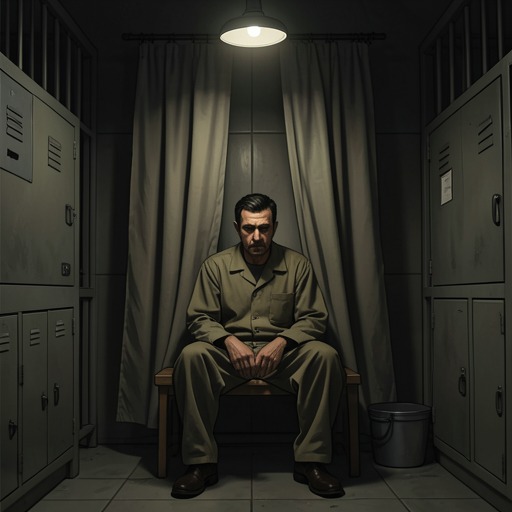
The institution was built in 1877 as the Royal Remand Prison and repeatedly modernized; by the time of the novel it was known as Moabit Remand Prison. Its redbrick building has three floors arranged in a star around a circular central hall. For more than 120 years, people awaiting the outcome of criminal proceedings had been held there. The cells, each only a few square metres, contained a bed, table, chair, cupboard, washbasin, and toilet. This compact inventory presents custody as an imposed routine of confinement, not as an abstract legal status.
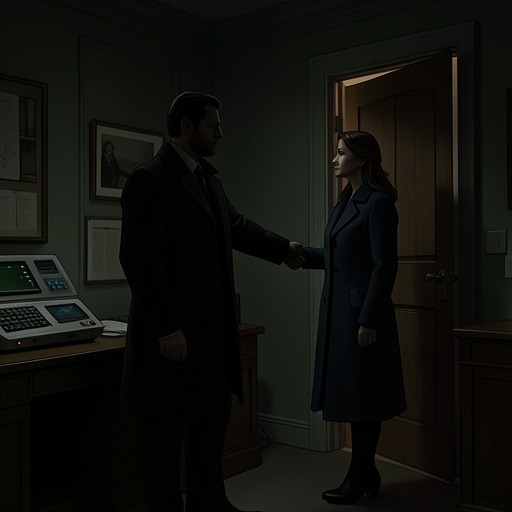
The prison’s long history and enduring function meet in Collini’s assigned cell: he is recorded as Prisoner No. 284/01-2, Section II, Cell 145. Before Leinen can see him, a woman officer checks the name on her list. Leinen presents the district court’s decision, and she enters his name on another list. The document has a specific consequence: Collini may now receive Leinen’s post without a magistrate censoring it. Access to the client, and even communication with him, depends on formal authorization and administrative steps.
Interviews and Prison Routine
Leinen waits outside one of the small interview rooms used by lawyers as officers escort inmates along the corridor. The officers refer to the prisoners as if they were objects being moved from place to place. The narration distinguishes this habitual, simple way of speaking from personal contempt: most officers do not want to know what offences the prisoners are charged with. The prison’s routine thus strips encounters down to movement, identification, and procedure, without presenting the staff as uniformly hostile.
Collini arrives in the blue prison uniform; the murder squad has taken away his own clothes. The interview room is arranged for functional use: a Formica table, two chairs, a washbasin, a small high window, an empty biscuit tin serving as an ashtray, and a red alarm bell beside the door. Its walls are painted yellow gloss partway up. These concrete details define the lawyer’s meeting with his client as a controlled institutional encounter, bounded by a room and the prison’s procedures rather than the ordinary circumstances of conversation.
Collini and Leinen’s Visits
During their first described meeting, Leinen tells Collini about his friendship with the Meyers and asks whether that connection presents a problem. Collini does not react. The question matters because Leinen’s assignment places him in a difficult personal position, but the prison scene offers no reassurance or explanation from the client. Leinen must work with the silence rather than treat it as an answer.
Over the months following the arrest, Leinen visits Collini once a week. Collini does not express wishes or complain; he remains calm and courteous, yet refuses to answer questions about his motive. Leinen repeatedly explains that the refusal makes it difficult to construct a sensible defense. At times Collini remains mute; at others he says that nothing can change matters now. The regular visits establish silence as a recurring condition of the lawyer-client relationship, not a single dramatic refusal. The prison is where Leinen encounters that condition repeatedly and where the limits of what he can learn become part of his work.
One encounter ends with an unexpected return. After Collini and the officer have walked away, Collini stops in the corridor and stands motionless, looking down at his shoes for almost a minute. He then turns back to the visitors’ room and thanks Leinen, acknowledging that the situation is not easy for him. He does not wait for a reply and walks away again. The moment does not resolve the questions surrounding the case, but it briefly alters the pattern of silence: Collini offers recognition and thanks without explaining his motive.
A Threshold in the Defense
After one visit, Leinen has to find his way back to the lawyers’ exit. He goes in the wrong direction, is redirected by a woman officer, and then waits outside a bulletproof-glass door for its opening system to operate. The plaster above the door is flaking. Beyond that threshold are prisoners waiting to be found guilty or acquitted; within this narrow world, the professors, textbooks, and discussions of legal study have no place. Leinen recognizes the difference between considering a legal problem and standing among people whose cases will have immediate, final consequences.
He understands that he could give up the legal-aid defense brief. Collini has killed Leinen’s friend, and refusing the assignment would be easy to explain. The prison’s confinement sharpens the choice without deciding it for him: professional obligations are no longer remote principles, but a duty attached to a silent, accused man in custody. Later, after extensive work on the case, Leinen returns to the prison and spends seven hours there with Collini. When he leaves, he knows what he must do. The account does not specify what passes between them during those hours, but the visit marks a decisive point in Leinen’s course as counsel.
Narrative Significance
The prison recurs as the place where legal process becomes personal and material. Lists and permissions govern contact; the interview room constrains the meetings; the exit door makes Leinen’s own decision visible as a passage out of, and back into, professional responsibility. Meanwhile, Collini’s calm manner and refusal to disclose his motive resist the expectation that a defense lawyer will be given a usable account by his client.
That tension gives the setting its particular significance. Moabit Remand Prison holds Collini while his case awaits judgment, but it also becomes the site at which Leinen must confront what defending him requires. Its established routines do not provide an answer to the case’s moral and legal questions. Instead, the weekly visits, the delayed access, the silent meetings, and the long visit before Leinen’s decision show how those questions persist within the ordinary machinery of custody.